Nearly 39 days of uninterrupted live broadcasting on YouTube. For nearly 919 hours, La Casa de Alofoke 2 kept streaming, people kept watching and a livestream grew into a globally discussed live format. This Guinness World Record shows where the real power of livestreaming lies: in repetition, recognition and an audience that keeps coming back.
What happened?
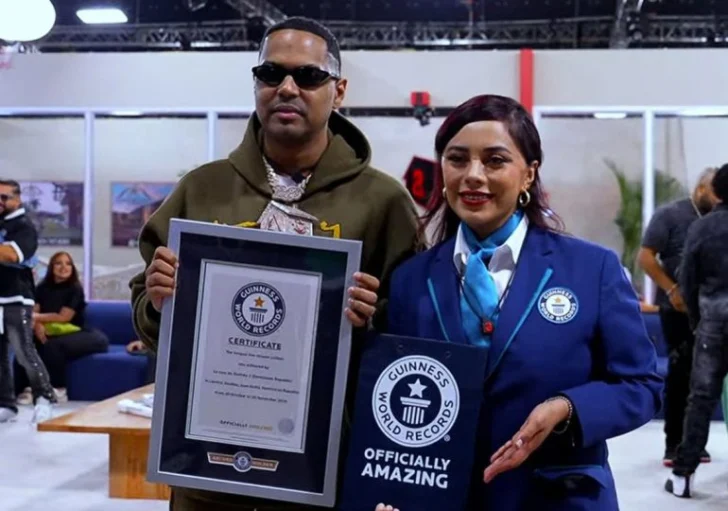
La Casa de Alofoke 2 is a Dominican reality format by Alofoke Media Group, broadcast via YouTube. Not a one-off livestream, but a 24/7 format in which participants live together, the audience watches, reacts and the story continuously develops. Guinness World Records confirms that La Casa de Alofoke 2 set the record for the longest live-stream video with 918 hours and 55 minutes. That rounds up to nearly 39 days live. The broadcast ran from 20 October to 28 November 2025 at Lántica Studios in Juan Dolio, Dominican Republic. Guinness explicitly states that YouTube was the primary platform.
YouTube itself also places La Casa de Alofoke in a broader development. In a trend article about 2025, YouTube describes it as a native YouTube reality show that redefined the format. According to YouTube, the format attracted 2 million concurrent viewers and the 24/7 broadcast accumulated more than 300 million views. This makes it more than just a record attempt — it reflects a broader movement: creators are building live formats that can compete with traditional media events in terms of reach and impact.
Local sources make the story more concrete. Listín Diario reported at the start of the record attempt that the second season premiere of La Casa de Alofoke 2 attracted more than 2 million connected viewers. The same article also mentions that Susana Reyes, official adjudicator for Guinness World Records, was present in the Dominican Republic to verify the attempt and observe the rules.
Afterwards, Acento reported that Guinness officially validated the achievement and that La Casa de Alofoke 2 surpassed the previous record by more than 300 hours. That previous record had been held since 2022 by the Chinese Zhejiang Luyuan Electric Vehicle Co. Ltd., with 624 hours, 37 minutes and 55 seconds.

Why this is interesting for brands and organisations
This record shows that livestreaming has come of age. A livestream no longer has to be a standalone broadcast. It can also be a recurring format, a community engine, a live media channel or a series of moments that audiences keep coming back for.
What La Casa de Alofoke demonstrates so well: people keep watching because there is a format. There are familiar faces, rhythm, tension, interaction, recognisable moments and an audience that becomes part of the story. The strength lies in the repetition and the build-up.
For brands, governments and organisations, that is an interesting thought. Many livestreams are still treated as a one-off project: one webinar, one town hall, one online event, one recording.
But the real value often emerges when you think further: can this become a series? Can this become a recognisable recurring moment? Can audiences get used to us being live at fixed times? Can YouTube be not just our archive, but also our stage?
Think in formats
The lesson of this world record is not that every brand needs to go live for 39 days. The real lesson is that live communication becomes stronger when you think in formats rather than standalone broadcasts. A good live format has a clear promise, a recognisable rhythm and a reason for audiences to come back. This makes livestreaming not just a technical tool you deploy occasionally, but a strategic part of your communication mix: to build an audience, create interaction, deepen stories and claim moments on platforms like YouTube. Those who only see live as a registration miss its power. Those who treat live as a recurring format build reach, engagement and recognition.