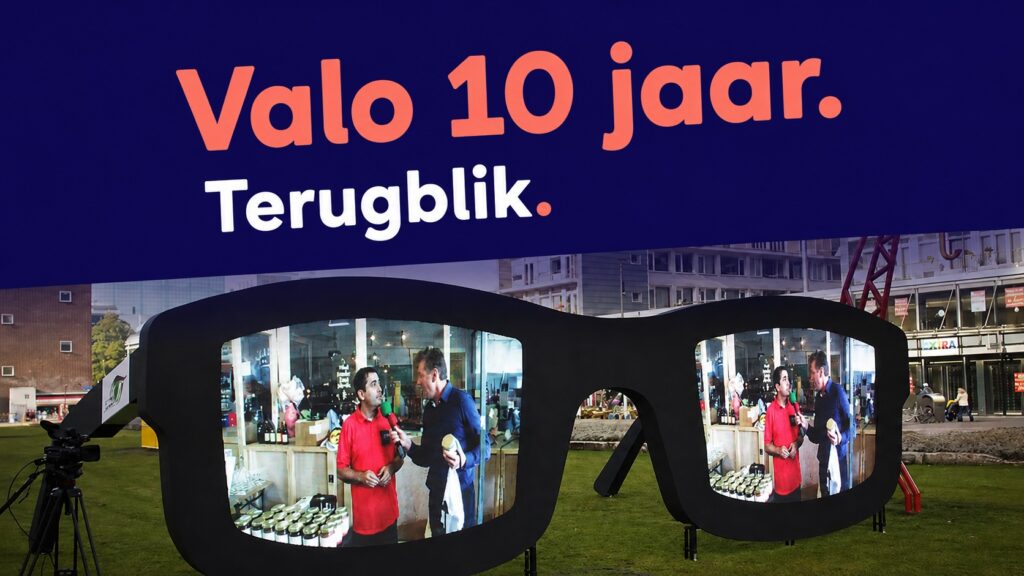
What if you do not make a poster, play a campaign video or hand out a flyer, but let a district speak back live? In 2015, we got to do exactly that.
10 years of Valo
This year Valo turns ten. A good moment to look back. Not only at what we do now, but especially at the projects that shaped us. Because Valo was not always the specialist in online events, livestreams and hybrid communication. We started from video production: filming stories, putting people on screen, running productions, editing and delivering.
But in 2015 there was a turning point when we experienced the power of live video and how it can bring people together.
One of the projects in which we felt that very strongly was ZieZuid. A campaign in Rotterdam in which, on behalf of Coopr (now Brand Potential), we were allowed to handle the technical execution of a live video connection between Rotterdam city center and Rotterdam South. That may sound fairly normal now, but in 2015 it was truly pioneering.
Text continues below the video.
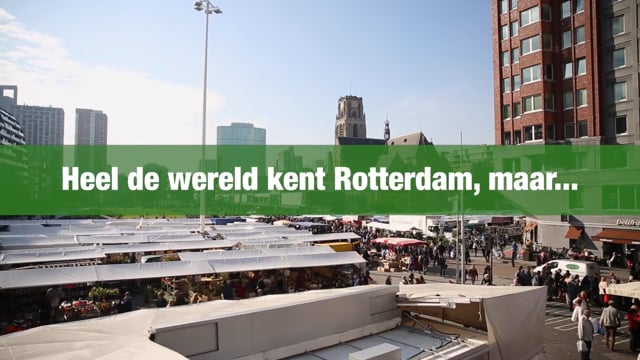
Not a film about South, but live contact with South
The ZieZuid campaign was built around a strong and simple idea: let Rotterdammers look at Rotterdam South again. Not by throwing yet another flyer, poster or commercial at it, but by literally letting people look at South through a different pair of glasses.
And those glasses were really there! Next to the Markthal stood a giant pair of glasses, about ten by seven metres. An object you simply could not miss. Large, playful, a little cheeky and therefore exactly Rotterdam. In the lenses of those glasses were two large screens. And on those screens, a live connection to Rotterdam South was shown.
Text continues below the image.
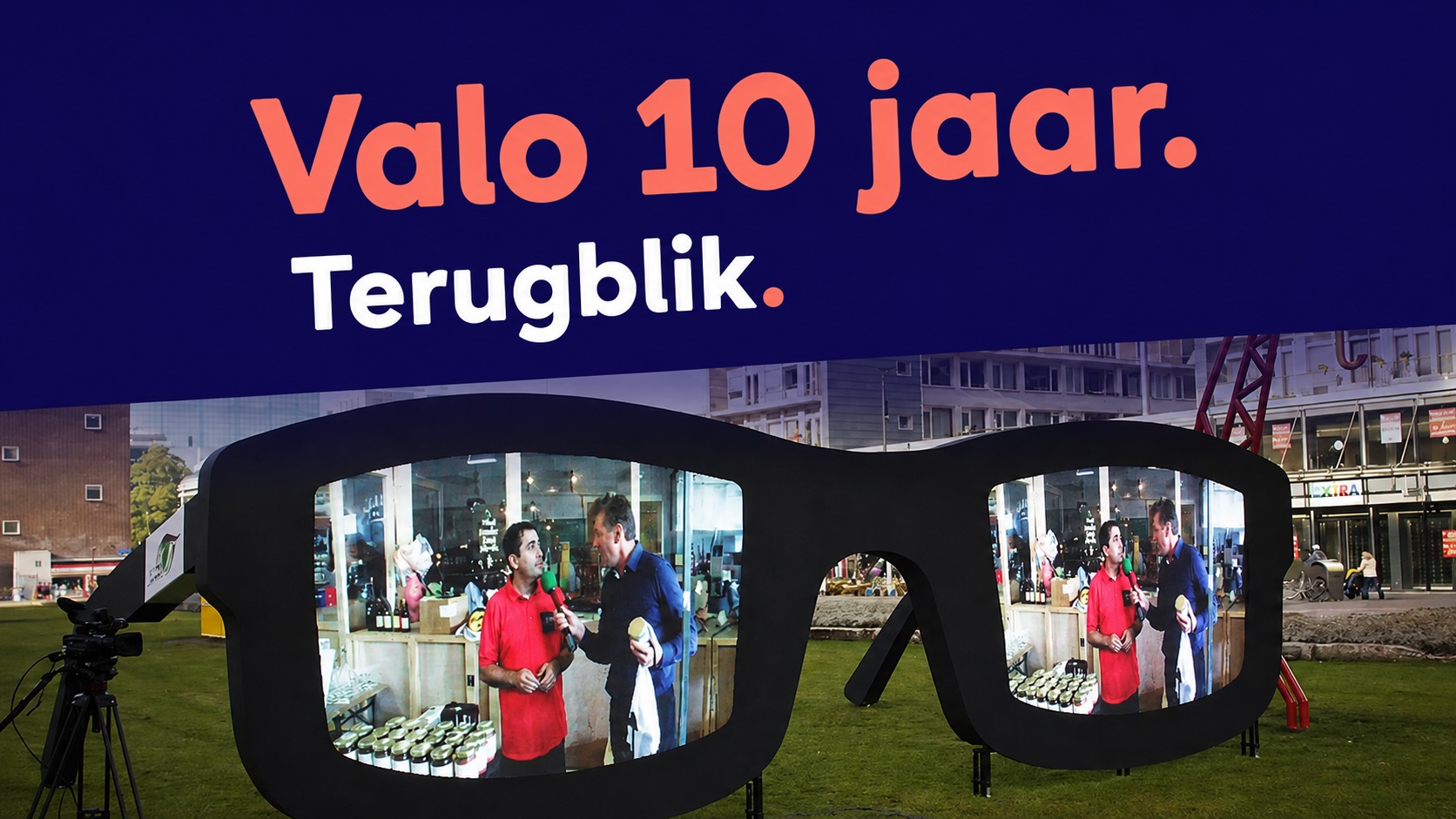
Passers-by in the city center could look through the glasses and make live contact with people in South. On the other side stood well-known Rotterdammers Tim Hartog and Jack Kerklaan. They talked about their favorite places, responded to the audience and invited people to discover South; live, at that moment, in direct contact with the people on the street and through the live video connection.
That immediately made the campaign much stronger. The message was no longer: “Rotterdam South is more fun than you think.” The experience became: “Look, South is here. Now. Right in front of you.”
In 2015 this was still technically quite exciting
We need to place ourselves back in 2015. Livestreaming was not yet as established as it is now. Teams and Zoom were not yet part of daily reality. Hybrid events were not yet common practice. For many organizations, a webinar was still something new, and a live connection on location was often technically complicated, fragile and exciting.
On top of that, 4G had only just been rolled out nationwide in the Netherlands. Mobile internet was becoming faster, more reliable and more interesting for professional applications, but it was still far from as obvious as it is now. Today we easily pull a hotspot from our bag and expect everything to work. Back then, a live video connection via 4G in public space still felt like a technical leap forward.
And precisely that made this project so interesting for us. We were not in a safe studio with fixed lines, controlled light and predictable circumstances. We were working right in the middle of Rotterdam, at a public activation, with passers-by, screens, timing, technology and a live connection to another place in the city.
There was tension in it. And that is exactly what makes live so beautiful.
The technology was invisible, but decisive
With good live technology, the audience should ideally not have to think about the technology at all. People should not be busy wondering how the signal was carried, how the connection was made or what equipment was behind it. They should simply look through those glasses and feel: hey, I am in live contact with Rotterdam South.
But behind the scenes, everything had to be right. The connection had to be stable enough. The image had to appear on the screens in the right way. The timing had to work. The people in South had to be able to respond to what was happening at the Markthal. And all of that in an environment where you never have complete control.
That is exactly the tension in which Valo later came to excel more and more: using technology without letting technology take over the story. Not centering the equipment, but the moment. Not showing how complicated something is, but making sure it feels logical, smooth and natural for the audience.
ZieZuid was an early lesson in that. The live connection was technically special, but the value lay in what that connection made possible.
The livestream was not an extra. The livestream was the idea.
What made this case so strong is that live video was not added to a campaign afterwards. It was not: “We have a campaign and oh yes, let us also add a livestream.” No, the live connection was at the heart of the concept.
The glasses symbolized looking differently. The screens made that way of looking concrete. The live connection gave the idea energy. People were not watching a message about South, they were getting a direct encounter with South.
That is an important difference. Much communication remains stuck in broadcasting. A brand, organization or campaign says something and the audience is supposed to receive it. But live communication can do something else. Live can respond. Live can play with the moment. Live can make people feel like they are part of what is happening.
And that is exactly what happened here. The city became a little smaller. City center and South were not opposite each other, but connected through image, sound and curiosity.
Why this left Valo wanting more
For us, ZieZuid was one of those projects where you already feel during production: there is something here. This is not just a fun technical job. This is a direction.
We came from the world of video production. There you learn to look, frame, tell stories and edit. But live video added something you cannot edit in afterwards: the moment itself. The tension of knowing it is happening now. The energy of people responding immediately. The possibility of bringing different places, voices and audiences together.
That left us wanting more!
In the years that followed, we gradually shifted our focus further. From making videos to producing live broadcasts. From recordings to directed live formats. From individual livestreams to complete online events, webinars, hybrid gatherings, digital talk shows and interactive broadcasts.
Not because technology could do more and more, but because we increasingly saw what live communication can mean. It can bridge distance. It can bring experts, administrators, employees, customers and audiences together at one moment.
It can turn a message into an encounter.
From video production to live online communication
When we look back on ten years of Valo, we see a clear movement. We started by broadcasting through video, but our core has increasingly shifted toward connection. Video remained important, but became part of something larger: live online communication.
That is also where our mission has become sharper and sharper. We want to bring people and ideas together online. Not only by turning on a camera, but by thinking about form, interaction, technology, direction, energy and audience experience.
Connect. Go live!
After all, a good online event is not a digital copy of a program in a venue. A good livestream is not a webcam with a better lens. A good webinar is not a PowerPoint with a talk beside it. Live online communication requires a different way of thinking. You need to understand where attention is. Where interaction is needed. When something becomes personal. When technology helps and when technology gets in the way.
ZieZuid already showed us an early version of that. The power was not only in the image. The power was in the connection between places, people and idea.
A campaign with a physical place and an online heartbeat
What we still like about this case is that it did not choose between physical and online. It was both. The glasses stood physically on the street. People walked past, stopped, looked, reacted and talked. At the same time, the activation only became truly special through the live online connection.
That is still a very current theme. Even now, organizations are looking for ways to connect physical moments and online audiences more effectively. Not as a fallback, but as an opportunity. How do you make an event bigger than the room? How do you involve people who are not in the same place? How do you make online participation feel not like watching from the sidelines, but like truly being part of the moment?
In 2015, we did that in a very direct way. With a huge pair of glasses, two screens and a mobile live connection. Simple in form, but forward-looking in idea.
The case that, in hindsight, turned out to be a turning point
Some projects are mainly exciting, fun or technically challenging in the moment. Only later do you see that they meant more. ZieZuid was one of those projects for us.
It showed that live video is not only suitable for recordings or broadcasts, but also for campaigns, activations and public interaction. It showed that a live connection can make a creative concept stronger. And it made us feel that we wanted to go further with this way of working.
In the years that followed, live became increasingly important within Valo. We started doing more livestreams, more online events, more hybrid formats and more productions in which people in different places still share one experience together. The technology improved, the possibilities grew and the demand from organizations became more serious.
But the core remained the same as with that pair of glasses next to the Markthal: how do we bring people closer together, even when they are not in the same place?
That giant pair of glasses made us realize that live is a powerful way to connect people. Looking back, those glasses shifted our vision toward bringing ideas together online. As a result, we increasingly embraced everything around livestreaming and online interaction, and from this Valo Online Events emerged.